All articles
Article
Interviewing for Insight: How Interviews Can Help You Use Timeline Analysis Tools in your Fire Investigation
In fire investigations, witness interviews are one of the most critical sources of contextual data. While the fire scene may offer burn patterns, material evidence, and electronic artifacts, it is often through witness statements that investigators learn when the fire was discovered, who was present, and what actions were taken before and during the incident. Yet interviewing is not just a task – it is a craft, especially when timeline construction is essential to origin and cause determinations.
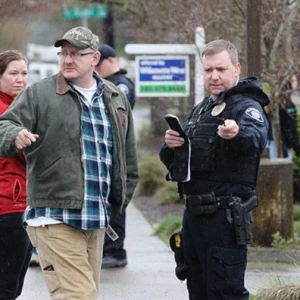
In fire investigations, witness interviews are one of the most critical sources of contextual data. While the fire scene may offer burn patterns, material evidence, and electronic artifacts, it is often through witness statements that investigators learn when the fire was discovered, who was present, and what actions were taken before and during the incident. Yet interviewing is not just a task – it is a craft, especially when timeline construction is essential to origin and cause determinations.
This blog explores how fire investigators can conduct effective interviews to extract high-value timeline data. Drawing from industry standards and guides, we will look at how to frame questions, assess reliability, and cross-reference witness statements for input into a timeline analysis tool for criminal investigation.
Witness Interviews and Timeline Data
It is difficult to identify a reasonable area of origin or the cause without some sort of interview data. In fact, NFPA 921 states that determination of the fire’s origin consists of collecting and analyzing data from three sources: 1) Fire patterns; 2) Analysis of fire dynamic; and 3) Witness Information and/or Electronic Data.
In addition, NFPA 921, Guide for Fire and Explosion Investigations, recommends using timeline analysis as one of several methodologies to help identify the area of origin. Though NFPA 921 does not specifically tailor its guidance towards one particular forensic software tool for timeline analysis (like TimeScene), it does provide guidance on how to interpret timeline data. Part of this interpretation includes categorizing timeline data into “hard time” and “soft times”. To paraphrase NFPA 921, hard times are those that are directly linked to a reliable clock of known accuracy. This could include sources such as video time stamps, CAD print outs, etc.
Soft times, on the other hand, are those times not linked to a clock of known accuracy. Soft times include witness statements. By their very nature, hard times are more reliable and therefore sought after by investigators.
Per NFPA 921, Soft times can be either classified as estimated or relative time. Relative time is the sequence of events or activities that are identified in relation to other events or activities. Estimated time is an approximation based on information that may or may not be relative to other events or activities. There are times when relative or estimated times can be determined within some degree of accuracy.
The real challenge of soft times, such as witness statements, is that their accuracy can vary. There are several factors, many realized subconsciously, that could affect a witness’ ability to recall times accurately. These could include feeling stress at the time of the event, being under the influence of alcohol or narcotics, and overly focused on one item due to fear.
Fire investigation is a context-driven discipline. The accurate interpretation of data – whether it comes from physical evidence, digital devices, or witness statements – depends on the investigator’s ability to place that data in context. Witness interviews, particularly those that yield timeline data, allow investigators to:
– Understand the sequence of events before, during, and after ignition
– Correlate fire dynamics and spread with human activity
– Identify anomalies or inconsistencies with physical evidence
– Establish or refute criminal intent or negligence
– Narrow potential areas of origin
– Validate or contradict electronic records, alarm data, or IoT devices
Principles of Interviewing Witnesses During a Fire Investigation
Unlike traditional interviews, fire investigation interviews must address unique cognitive and environmental factors. Witnesses are often in shock, have limited knowledge of fire behavior, or misinterpret what they saw. The investigator must approach interviews systematically to avoid introducing bias or error.
According to NFPA 1033, Standard for Professional Qualifications for Fire Investigator, all interview data should be individually analyzed, corroborated with other information, conflicting information is documented, and used to develop new leads. And, critically, NFPA 921, Guide for Fire and Explosion Investigations, highlights witness information as one of the three primary sources of information for origin determination – alongside fire patterns and fire dynamics.
NFPA 921 provides some basic guidance on interviewing but recognizes that witnesses are a critical source of non-scene data in virtually all incidents. NFPA 921 cautions investigators to test witness statements for reliability by not only evaluating the internal consistency of the statement but by comparing that information to a time line.
In addition, and critically, NFPA 921 states that timeline data should be synchronized by the investigator – and TimeScene does that work for you!
Types of Witnesses and Their Timeline Contribution
Fire investigators should interview a range of individuals, each of whom may hold different keys to the timeline:
– Discoverers of the fire
– Occupants
– First Responders
– Neighbors
– Property Managers
– Maintenance or Staff
– Utility Representatives
Each witness may provide critical context about the timing of alarms, appliance use, ventilation activity, or observable smoke and flames.
Techniques to Elicit Accurate Timeline Information
To build a reliable sequence of events, the investigator must frame questions that anchor witness memory to observable or sensory experiences. Best practices include:
Using open-ended questions: ‘Tell me everything you remember about that afternoon.’
Anchoring to routine: ‘What were you doing just before you noticed the fire?’
Establishing relative time markers: ‘Was it before or after sunset? Did the oven timer go off?’
Asking for sensory details: ‘What did you smell, hear, or feel?’
Using the ‘walk-back’ technique: start from discovery and rewind events.
Clarifying sequence: ‘Did you make the call before or after seeing flames?’
Cross-validating with other timelines: especially alarm data, video, and IoT records.
These techniques help minimize memory errors and guide the witness to recall sequence and duration without suggesting facts.
Witness interviews should be thorough and focus on timeline of activities before, during and after the fire event. Additional tactics investigators can use are to:
Break the interview into questioning about distinct, short segments of events leading up to and during the fire.
Clarify how the witness came up with their time estimation
If the witness is on scene, have them reenact their activities or show their perspective to investigators.
Ask the witness to identify other data sources for the timeline such as other potential witnesses who may have been with them, smart devices or appliances they use or know of, and pictures.
Studies About Witness Memory
Witness memory can be a complicated subject and there have been numerous studies regarding how witnesses recall events and how they estimate times. The results are a mixed bag and show that investigators must be cautious about relying solely on witness memory for their timeline analysis.
In 1987, Loftus et al worked with 469 participants over three experiments in which the participants watched a watched 30 second video of bank robbery. The group was split in two, with half surveyed about the duration of the incident immediately afterwards and the other half surveyed with the same questions 48 hours after viewing. Approximately 3% of the participants got the duration accurate (or had a lesser estimation than actual), while the worst overestimation was 900 seconds. The overestimation by those immediately asked was 250% on average, while the overestimation by those asked 48 hours later was … still 250% on average.
In 1978, Schneider et al worked with 155 participants who were asked to watch a video and then asked about police response time. Approximately 1% of the participants got the duration accurate (or had a lesser estimation than actual), while 50% of participants reported response times 15 minutes or longer. Notably the maximum overestimation was 15 hours.
In 2011, Grommet et al conducted a study with 40 subjects who were exposed to “fear cues” and “neutral cues”. Those exposed to “fear cues” had longer estimations than those shown neutral cues.
These studies are not listed to point out the unreliability of witness recall, but rather to caution investigators that all witness information should be reviewed in context of other data and evidence collected in the investigation.
Some External Factors Affecting Witness Statements
There are numerous factors that can affect witness accuracy and description of events. Investigators must be aware of these external factors and take them into consideration. These external factors include:
Stress and trauma – Memory can be disjointed or distorted when witnesses are exposed to trauma or serious stress. If this is the case, investigators should be patient and re-interview the witness at a later time.
Desire to please – Witnesses may tell you what they think you want to hear.
Misunderstanding fire behavior – Witnesses may use language to describe the smoke or fire characteristics, as well as timing, that is different than how the investigator would characterize it.
Time estimation errors – Use reference points to help correct perceptions.
Cognitive biases – The way questions are phrased can influence responses by witnesses.
Documentation should reflect uncertainties in recollections and avoid overstating the exact precision of a witness’s timeline unless supported by corroborative data.
Another potential pitfall is when investigators interview a group of witnesses at the same time rather than individually. This may raise issues of “contamination” and “memory conformity” when they may unintentionally influence each other’s recollections. Hearing others’ accounts can lead witnesses to embrace details or a narrative they did not personally observe, a phenomenon known as memory conformity.
Correlating Interview Data with Other Sources
Interview data, especially the timeline data gathered from those interviews, should never be considered without context. The timeline data gathered through interviews should be synchronized with, or at least considered in the context of data from:
– Alarm system logs
– IoT devices (e.g., thermostats, smart plugs, security cameras)
– Emergency call logs and dispatch records
– Scene evidence (e.g., ventilation openings, fire pattern spread)
– Video surveillance
– Utility data (e.g., power outages, gas flow interruption)
NFPA 921 strongly recommends synchronization of event times across systems and, when possible, witness accounts. If the data contradicts, investigators must assess the reason—human perception errors, faulty equipment, or improper time stamps.
Documenting the Timeline Analysis in the Origin and Cause Report
The origin and cause report will typically include sections detailing witness statements. These synopses will often include timeline data. This same timeline data may also find its way into a timeline analysis section of the same report. Regardless of the format, the origin and cause report should contain:
A synopsis of each interview
A clear statement on the timeline contributions made by the interviewee
If necessary, steps taken to verify or test reliability of information
An explanation of how this interview data factored into the final hypothesis
The origin and cause report should identify any significant anomalies or discrepancies between witness statements and other sources of data or evidence. This does not have to occur for every discrepancy, unless it is related to a critical issue in the investigation.
Timeline Analysis software tools like TimeScene will not only categorize and sort your timeline data, but will export this data for inclusion in the origin and cause report. This same export of data may later be used for visual graphics or jury exhibits. It is helpful to enter timeline data into a forensic software tool and allow the software to organize, sort and categorize the timeline data before incorporating it into your analysis as well as your origin and cause report.
Conclusion: How Interviews Can Help You Use Timeline Analysis Tools in your Fire Investigation
Witness interviews are foundational to effective fire investigation—especially when origin and cause hypotheses rely on timelines. By applying structured interview methods, being sensitive to witness limitations, and synchronizing interview data with other contextual sources, investigators can build strong, evidence-based narratives.
As fire investigation continues to evolve with more data-rich environments and increasing legal scrutiny, the ability to interview strategically and document interview-derived timelines thoroughly is more important than ever.
TimeScene integrates witness data (i.e. estimated times) into the master timeline and places it in the correct sequence with synchronized (i.e. hard times) timeline data. This seamless management tool generates accurate timelines quickly and allows for multiple investigators to provide input to the timeline.
Have a case where timing matters?
Tell us what happened and what’s coming up. We’ll show you how TimeScene could help.